
Common Plumbing Questions, Answered
Homeowners across [CITY], [STATE] ask [BRAND NAME] these all the time. Do not see yours below? Pick up the phone and call — we always answer.
Plumbing trouble has a way of feeling urgent, mysterious, and pricey all at once. But the more you understand about what your system is doing and which warning signs matter, the easier it is to stay ahead of a small problem before it turns into a big one. We put together the questions below to give homeowners in [CITY] and [COUNTY NAME] County clear, practical answers they can actually use. Slow drain, a water heater falling behind, a pipe making a sound it should not — start here. And if your question is not on the list, just reach out. We are glad to talk it through.
Emergency Plumbing Questions
Head straight for your main shutoff and get the water off first — that’s the priority before anything else. Once it’s off, give us a call and we’ll get a plumber out to replace the damaged section and bring your water back safely. One thing not to do: don’t reach for tape or a clamp as a fix. Line pressure will push right past it, and you’ll be dealing with the same puddle an hour later.
Shut the water off at the main first. If it’s just one fixture acting up — say a toilet or a sink — you can usually isolate it at that fixture’s own valve instead of killing water to the whole house. Stay away from any water pooling near outlets, switches, or your electrical panel. If there’s a low faucet nearby, like a hose bib, open it to help the lines drain, and move anything you don’t want ruined out of the affected area while you wait for us.
That’s water hammer — it happens when a valve shuts fast and the moving water has nowhere to go but slam back against the pipe. It’s not going to flood anything tonight, but that repeated impact wears on joints and fittings, and eventually something gives. A water hammer arrestor absorbs that shock and stops the banging. Worth having us install one before it turns into an actual leak.
Whenever an urgent problem hits, reach out and we will get a plumber headed your way as fast as we can. You will speak with a real local plumber when you call — every call is answered.
Drain Cleaning & Sewer Questions
Watch for more than one drain acting up at once — if the toilet backs up and the tub starts filling too, or water shows up somewhere it shouldn’t when you flush, that points to the main line rather than a single fixture. This isn’t one to wait on. A fully blocked main line means sewage has only one direction left to go, and that’s back into your house.
Hydro jetting cleans a drain by firing high-pressure water along the inside of the pipe. A snake just bores a hole through the middle of a clog; jetting strips the whole interior — grease, mineral scale, packed debris — and brings the line back to nearly its original capacity. It is the right call for clogs that keep returning, sluggish sewer lines, and any blockage that a snake alone will not keep clear.
Grease is the usual suspect. It goes down warm and liquid, but as soon as it hits the cooler pipe it firms back up and starts catching everything else that passes by — coffee grounds, food scraps, all of it. The fix starts with keeping grease and oil out of the sink in the first place. Once it’s built up enough to slow the drain, that’s a job for professional cleaning, not a bottle from under the sink.
A toilet that keeps clogging is usually one of two things: something got flushed that shouldn’t have (wipes and paper towels are the biggest offenders, even the ones labeled “flushable”), or mineral deposits have narrowed the rim jets enough to weaken the flush. If neither of those explains it, there’s likely a blockage further down the line, and a camera inspection is the fastest way to find it without guessing.
That smell means sewer gas is coming up through the drain instead of staying in the sewer line where it belongs. Nine times out of ten it’s a P-trap that’s dried out — that’s the curved section of pipe under the sink that’s supposed to hold a little standing water as a seal. Run the faucet for a bit and see if that clears it. If the smell keeps coming back, it’s worth checking for a blocked vent stack or a crack in the drain line.
Water Heater Questions
Plan on 8-12 years out of a standard tank unit, and closer to 15-20 out of a well-maintained tankless system. Once a tank heater is past the decade mark and you’re calling us for the second or third repair, it’s usually cheaper in the long run to just replace it than keep patching it.
A few usual suspects: sediment eating up room inside the tank, a cracked dip tube letting cold water blend in with the hot, or a heating element on its way out. Where the water is hard, sediment piles up quicker and is often the reason. We will track down the specific cause and repair or replace whatever is behind it.
Sediment settling at the bottom of the tank is almost always the cause. Water gets trapped under that layer and boils as the burner cycles, which is where the popping comes from. Left alone, it makes the unit work harder and shortens its life. A flush clears it out — and if the tank hasn’t been flushed in years, that might be the moment to talk replacement instead.
The big draw is that a tankless unit only heats water when you actually call for it, so a family that’s used to running out of hot water halfway through showers stops having that problem. You’re also not burning energy keeping a 40-gallon tank hot all day, and the unit itself takes up a fraction of the closet space a tank does. For most households that switch, it’s a noticeable upgrade.
If the water is coming from the tank body itself, that almost always points to internal corrosion eating through the tank wall, and that means replacement. When the leak traces back to a valve, fitting, or connection instead, we can usually repair it without swapping the whole unit. Give us a call and we will pinpoint the source before we recommend anything.
General Plumbing Questions
The short version: if water is actively getting into places it shouldn’t, if it’s a health hazard, or if you’ve lost water to the whole house, that’s an emergency. Think sewage backing up into a tub, a pipe spraying water into a room, or every tap in the house running dry. If you’re staring at a leak you can’t stop with a nearby valve, or waste coming up somewhere it shouldn’t, don’t wait around — call us and we’ll get moving.
Most homes have it where the supply line enters the house — check the garage first, then the exterior wall closest to the street. No luck there? Look for a curb box out near the sidewalk. Turning the valve clockwise shuts the water off to everything in the house. It’s worth testing yours once a year; valves that never get touched have a habit of seizing up right when you need them most.
One weak faucet usually means a clogged aerator or a valve that isn’t fully open — an easy fix. If pressure is low everywhere, that points to something upstream: a pressure regulator that’s failing, a leak somewhere in the main supply line, or mineral scale that’s slowly narrowing the pipes from the inside. That last one is common wherever the water runs hard. Either way, we can track down which one it is.
Yes, and it’s the cheapest insurance you can buy against an emergency call. A typical visit includes checking your water pressure, testing that shutoff valves actually shut off, looking at your drains for early signs of buildup, and flushing the water heater to clear out sediment. Small problems caught during a visit like this almost always cost less than the same problem after it’s had a year to get worse.
We cover [CITY] along with the surrounding communities throughout [COUNTY NAME] County. If you are not certain your neighborhood is in range, give us a quick call and we will confirm.
We’d steer you away from them. Those products work by generating heat through a caustic reaction, and that heat is hard on your pipes — it can soften PVC and speed up corrosion in anything metal. They’re also unpleasant and risky to handle, and not great for what happens after they go down the drain. A mechanical snake or hydro-jetting clears the same clog without any of that risk to your plumbing.
Pipe Repair & Repiping Questions
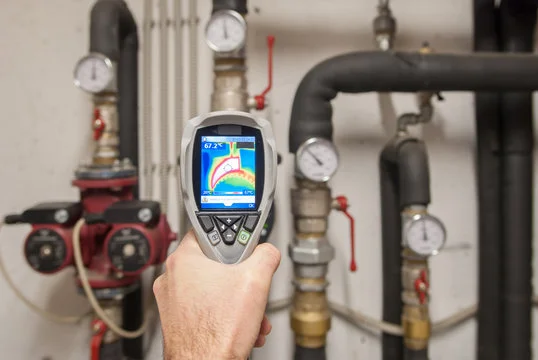
A water bill that’s higher than usual with no obvious explanation is often the first clue. Beyond that, listen for running water when every fixture in the house is off, and check for warm spots on flooring, damp patches on walls, or mold showing up somewhere it has no business being. Any one of these is worth a call — our leak detection equipment can usually pinpoint the source without opening up walls or floors to go looking.
If it’s original galvanized steel, yes — plan on replacing it. These pipes rust from the inside as they age, and that rust narrows the pipe diameter, drags your pressure down, and can affect water quality along the way. Switching to copper or PEX during a repipe solves the problem permanently instead of chasing symptoms one leak at a time.
PEX is a flexible plastic pipe that shows up all over modern plumbing. It shrugs off scale better than copper and takes temperature swings with less stress on the connections. It also goes in faster than rigid pipe, which trims the labor cost. For repiping work, PEX is a strong choice.
That’s a leak in the supply line running under your foundation, and there are two ways to deal with it. One is opening a section of the slab to get straight to the damaged spot. The other — and usually the better option — is rerouting that section of pipe up through the attic or walls and bypassing the buried run entirely. Rerouting means less concrete work and less disruption to your home.
Barely a trickle out of a faucet during a cold snap is the classic sign. Leave that faucet cracked open — it relieves pressure while things thaw. A hair dryer on low, moved along the pipe, can help speed things up; skip anything with an open flame. If you can’t locate where it’s frozen, or you’ve already got a split pipe on your hands, that’s when to call us instead of waiting it out.
Fixture & Appliance Questions
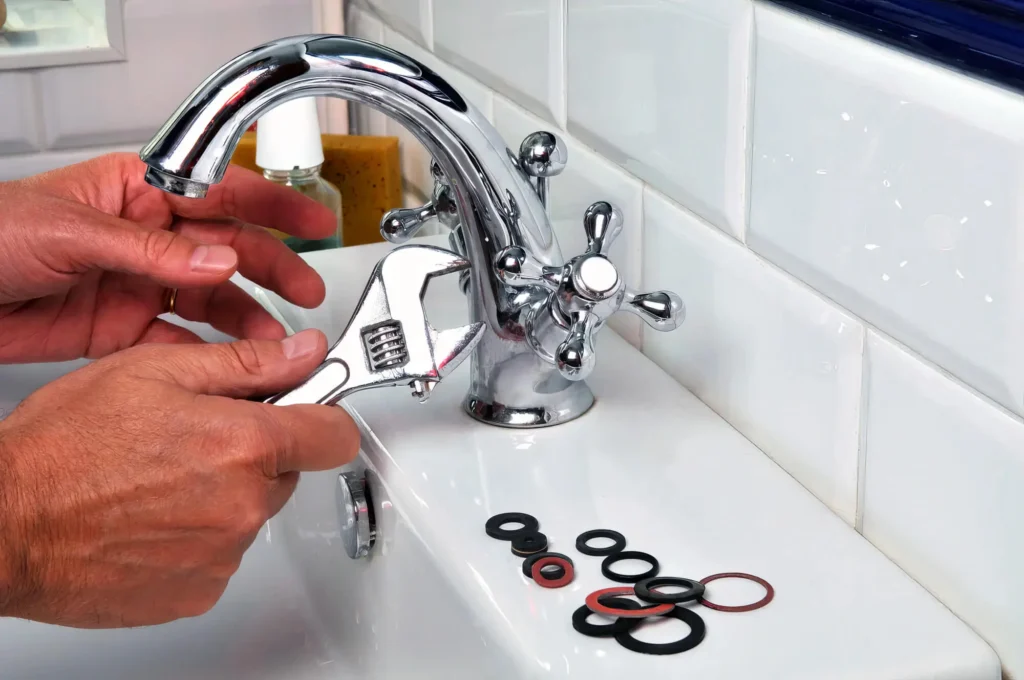
It is — a running toilet can pour hundreds of gallons down the drain every day and send your water bill climbing. The cause is nearly always a worn flapper or a failing fill valve, and both are quick fixes. We can take care of it in a single visit.
For a straightforward like-for-like swap, plenty of homeowners can manage it. But once you are dealing with shutoff valves that have not budged in years, supply lines crammed into a tight cabinet, or a fixture that calls for changes to the existing plumbing, professional installation heads off leaks, cross-connections, and damage to what is around it. We fix a fair number of DIY jobs that started seeping weeks later.
Absolutely — we install customer-supplied fixtures all the time. Just know that we can only stand behind the installation work, not the fixture itself. And if you would like a steer toward brands that tend to hold up, we are happy to weigh in before you buy.
That’s a pressure-balance problem. The toilet tank refilling pulls cold water off the same line feeding your shower, and for a few seconds the shower gets more hot than it should. A pressure-balancing valve solves it by automatically adjusting to keep the mix steady no matter what else in the house is pulling water at the same time.
Garbage Disposal Questions
Steer clear of anything fibrous — celery, corn husks, that kind of thing — along with starchy foods like pasta, rice, and potato peels, plus grease, coffee grounds, and bones. Fibrous stuff tangles around the blades, starchy foods swell up once they’re wet, and grease just re-solidifies further down the line and causes a clog somewhere you can’t see.
That hum means the motor has power but the flywheel underneath is physically stuck on something. Switch it off right away so the motor doesn’t burn itself out trying to push through it. Most units have a reset opening on the bottom that takes the hex wrench that came with it — that clears the jam in most cases. If that’s not something you want to mess with, we’ll come clear it.
Where the water’s coming from tells you a lot. Leaking around the top usually means the seal where it meets the sink has worn out. A leak toward the side points to the dishwasher hose connection. And water coming from the bottom of the unit itself means the internal seal has failed — at that point, a new disposal is the more practical fix than trying to repair the old one.
Yes — disposal installation is a regular part of the kitchen remodels and new sink setups we handle. We make sure the drain layout is right and the unit is anchored solidly so it will not rattle loose or leak.
Commercial Plumbing Questions
We do — restaurants, office buildings, retail spaces, and property management companies throughout [CITY] and [COUNTY NAME] County all call us for their plumbing. We know a stopped drain in a commercial kitchen costs a business real money every hour it’s down, so we treat those calls with urgency.
We do. Any commercial kitchen serving food needs a properly sized grease trap to keep fats and oils from reaching the city sewer system, and we handle both installation and the regular maintenance that keeps it working — and keeps you compliant with local health code.
Yes — multi-unit repiping is work we regularly take on. The main difference from a single-family job is coordination: we phase the work so occupied units aren’t all without water at once, and we keep property management looped in on the schedule the whole way through.
Troubleshooting Tips
That rotten-egg smell is typically bacteria in your water reacting with the magnesium anode rod that sits inside your water heater tank. Swapping it for an aluminum-zinc rod usually clears it right up. If the smell shows up in your cold water too, though, it’s probably coming from the supply itself rather than the heater, and that’s a different fix.
Find the shutoff valve on the wall behind the toilet — it’s usually low, near the floor — and turn it clockwise until the water stops. Valve stuck or missing? Take the tank lid off and hold the flapper down; that stops water from feeding into the bowl just as well. Once you’ve got it under control, give us a call so we can find out why it happened.
Find someone who’s handled full renovation work, not just repair calls — the two require different skill sets. A remodel usually means rerouting supply and drain lines and bringing older sections of the system up to current code. Give us a call before you start demo and we’ll walk the project with you so there are no surprises once the walls are open.
Got a Question We Didn’t Cover?
Call [BRAND NAME] and talk to a local plumber who will give you a straight answer. We serve [CITY], [COUNTY NAME] County, and the communities around them. Every call is answered.